

No-prep, minimal-prep, and traditional veneers primarily differ in how much natural tooth structure is altered before the veneers are placed. No-prep veneers require little to no enamel removal, minimal-prep veneers involve conservative reshaping, and traditional veneers generally require more preparation to create the necessary space and fit.
Patients searching for no prep veneers Woodland Hills or minimal prep veneers Woodland Hills often want to preserve as much natural tooth structure as possible. However, the most conservative option is not automatically the right option for every smile. Tooth position, enamel quality, existing restorations, discoloration, bite forces, and the changes a patient wants to make can all influence the recommendation.
To understand the broader treatment, candidacy, and next steps, you can explore veneer treatment options in Woodland Hills.
Why Veneer Preparation Matters
A veneer is a thin restoration bonded to the front surface of a tooth to change its visible color, shape, size, or proportion. For the veneer to look natural and fit comfortably, the dentist must determine whether space needs to be created on the tooth.
Without appropriate planning, adding material to the front of a tooth could make it appear too thick or prominent. Preparation allows the dentist to control the final contour, but the necessary amount varies significantly from one patient to another.
The goal is not simply to remove as little enamel as possible. It is to preserve healthy tooth structure while creating an appropriate foundation for the planned restoration. Sometimes that means no visible reduction. In other cases, conservative or traditional preparation may produce a more suitable result.
What Are No-Prep Veneers?
No-prep veneers are thin restorations designed to be placed with little to no removal of tooth enamel. Depending on the case, the dentist may still perform minor contouring or surface preparation to help the veneers fit and bond properly.
This approach tends to work best when adding a small amount of volume will improve the tooth rather than make it look bulky. Potential candidates may include people with:
- Naturally small or narrow teeth
- Minor spaces between teeth
- Slightly uneven tooth shapes
- Teeth positioned far enough inward to accommodate added material
- Healthy enamel that provides a suitable bonding surface
No-prep veneers may not be appropriate when teeth are already prominent, severely crowded, significantly rotated, or require substantial changes in shape or color. Placing a veneer without creating enough room could produce an unnatural contour or affect the way the teeth meet.
Are No-Prep Veneers Fully Reversible?
No-prep veneers should not automatically be described as completely reversible.
They may preserve nearly all the natural enamel, but placing them can still involve enamel etching, bonding agents, minor contouring, or other surface changes. Removing a bonded veneer may also affect the underlying enamel.
It is more accurate to say that no-prep veneers can be highly conservative. Whether a particular case could later be reversed without meaningful changes to the teeth must be evaluated individually.
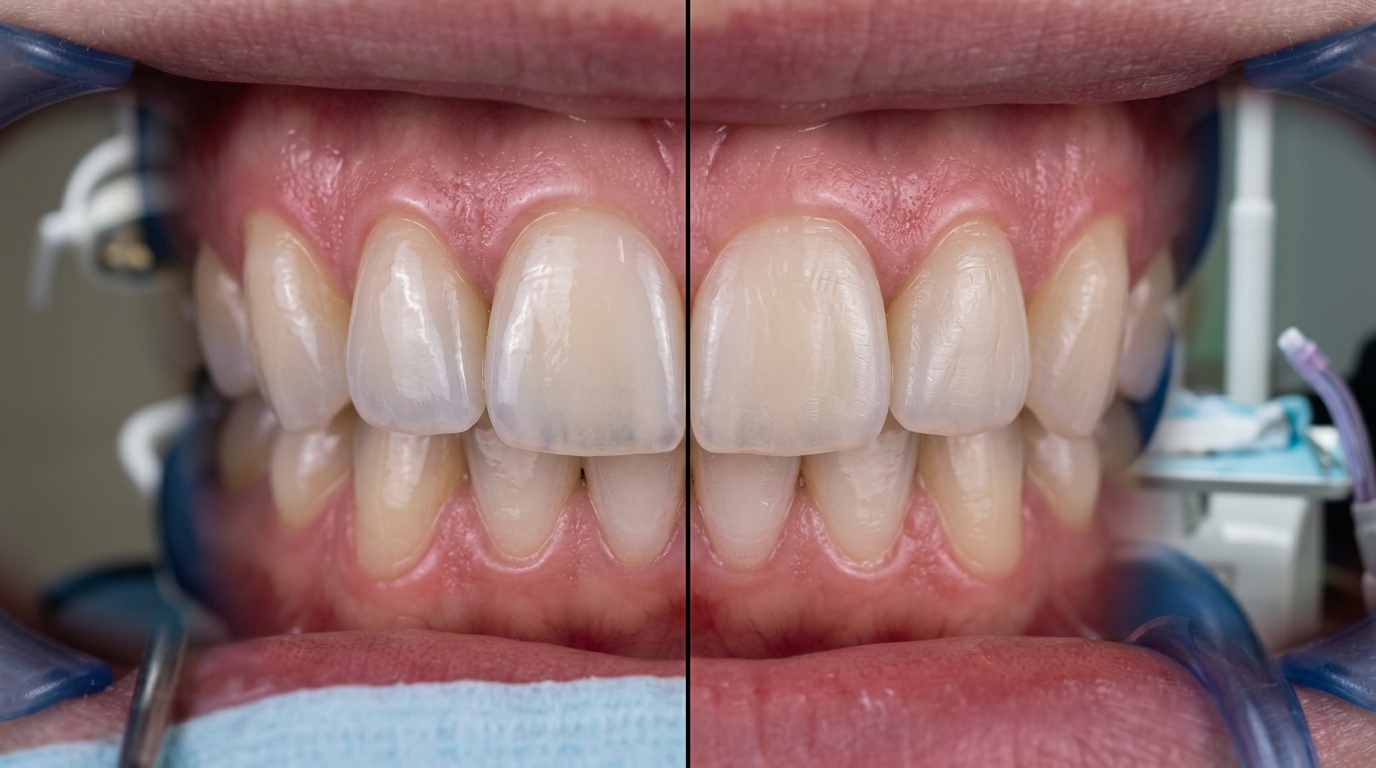
What Are Minimal-Prep Veneers?
Minimal-prep veneers involve reshaping a small, conservative amount of enamel before the restorations are placed. This creates controlled space for the veneer while preserving as much healthy tooth structure as the treatment allows.
This approach often serves as a middle ground between no-prep and traditional preparation. It may give the dentist more control over the veneer’s thickness, margin placement, shape, and final position without requiring more extensive tooth reduction.
Minimal-prep veneers may be considered when a patient has:
- Mildly prominent or uneven teeth
- Small chips or areas of wear
- Moderate discoloration
- Minor spacing or alignment concerns
- Teeth that need controlled changes in length, shape, or proportion
Because enamel is intentionally reshaped, minimal-prep veneers are generally considered irreversible. Once tooth structure has been removed, the teeth will continue to require an appropriate restoration.
What Are Traditional Veneers?
Traditional veneers generally require more tooth preparation than no-prep or minimal-prep veneers. The dentist reshapes the front surface and, when appropriate, portions of the sides or edges of the tooth to create room for the planned restoration.
This does not mean that every traditional veneer requires extensive tooth reduction. Preparation should still be carefully planned and limited to what the individual case requires. However, traditional preparation provides greater flexibility when substantial changes are needed.
Traditional veneers may be considered for:
- Significant changes in tooth shape or proportion
- Teeth that are prominent or positioned outward
- More pronounced discoloration
- Larger chips or areas of wear
- Existing restorations that affect veneer planning
- Cases requiring more control over the final contour
Traditional veneers are irreversible because natural tooth structure is removed. The prepared teeth will need to remain protected by veneers or another suitable restoration.
A veneer covers the visible front of a tooth, while a crown generally surrounds much more of it. Patients whose teeth have significant damage or structural weakness may want to compare veneers and crowns before deciding which treatment category fits their needs.
No-Prep Veneers Woodland Hills and Minimal-Prep Veneers Woodland Hills: Side-by-Side Comparison
|
Approach |
Natural tooth preservation |
General reversibility |
Typical candidacy |
|
No-prep veneers |
Preserve nearly all enamel, although minor contouring or surface preparation may still occur |
Should not be assumed to be completely reversible |
Often considered for small teeth, minor gaps, subtle shape changes, and teeth with enough space for added material |
|
Minimal-prep veneers |
Preserve substantial enamel while creating a small amount of controlled space |
Generally irreversible because some enamel is reshaped |
Often considered when modest changes in contour, position, color, or proportion are needed |
|
Traditional veneers |
Require more preparation than the other approaches, based on the treatment plan |
Irreversible |
Often considered for more significant shape changes, prominent teeth, stronger discoloration, wear, or cases requiring greater contour control |
These categories are helpful for explaining treatment, but they are not always separated by a precise measurement. Preparation can vary from tooth to tooth within the same smile. One tooth may require almost no reshaping, while another may need more preparation to create a balanced result.
How Does a Dentist Select the Preparation Approach?
Choosing between no prep vs minimal prep veneers requires more than looking at the front of the teeth. A dentist must evaluate how the proposed veneers will interact with the entire smile and bite.
The evaluation may include:
- The current position and alignment of each tooth
- The amount and quality of available enamel
- Tooth color and the degree of discoloration
- Existing fillings, bonding, crowns, or other restorations
- Gum health and the location of the gumline
- Bite forces and signs of grinding or clenching
- The patient’s desired changes in shape, size, and color
A diagnostic preview, model, or digital smile design may help show how additional material could affect the final contours. This planning is particularly important with no-prep treatment because the dentist must determine whether the veneer can be added without making the tooth look or feel too prominent.
When Might Another Cosmetic Treatment Be More Appropriate?
Not every cosmetic concern requires veneers. Small chips, minor gaps, or limited shape irregularities may sometimes be treated with dental bonding. Whitening may be more appropriate when tooth color is the primary concern and the underlying teeth are otherwise satisfactory.
Dental bonding uses tooth-colored resin applied directly to the tooth, while veneers are separately designed restorations bonded to its front surface. Readers considering a smaller cosmetic correction can review veneers versus bonding for a more focused comparison.
Orthodontic treatment may also be worth discussing when tooth position is the central concern. Moving teeth into improved alignment can sometimes reduce the amount of preparation that would otherwise be needed for cosmetic restorations.
The appropriate recommendation depends on what needs to change and whether that change is primarily related to color, shape, position, or structural condition.
Frequently Asked Questions About Veneer Preparation
No-prep veneers are placed with little to no enamel removal, although minor contouring or surface preparation may still be required. Minimal-prep veneers involve intentionally reshaping a small amount of enamel to create controlled space for the restoration.
No-prep veneers should not automatically be considered fully reversible. Although they may preserve nearly all natural enamel, bonding, enamel etching, minor contouring, and eventual veneer removal can affect the tooth surface.
Minimal-prep veneers are generally considered irreversible because a small amount of enamel is intentionally reshaped. Once this preparation has occurred, the tooth will continue to need a suitable restoration for protection and appearance.
Traditional preparation can provide more flexibility for significant changes in tooth shape, position, or color, but it is not universally better. The appropriate approach depends on the condition of the teeth, the desired changes, and how much space is needed for a natural-looking restoration.
A dental evaluation is needed to assess your enamel, tooth position, bite, gum health, existing restorations, and cosmetic goals. The most conservative suitable approach is the one that preserves healthy structure while providing enough space for an appropriately shaped veneer.
Choosing the Right Veneer Approach in Woodland Hills
No-prep, minimal-prep, and traditional veneers are different tools for different clinical situations. The best choice balances tooth preservation with the space, contour, color control, and structural support required for the individual smile.
If you are considering no prep veneers Woodland Hills or minimal prep veneers Woodland Hills, schedule a consultation with Dr. Ahdoot. He can evaluate your teeth, explain which preparation approach may be appropriate, and help you understand the next steps for your smile.